
When you enter a parking garage or public corridor, the last thing you want to see is pitch black. Insufficient lighting not only creates unease but also poses safety risks. Sensor linear lights were designed to solve this problem – they turn on when people or vehicles are detected, keeping public spaces bright and safe. In practice they not only improve user comfort but also reduce energy waste and management costs. In other words they are a lighting solution that balances safety, energy efficiency and smart functionality.
1. Why Public Areas Need Sensor Linear Lights?
Constant Lighting in Public Areas is a Waste
In traditional public spaces, lighting is based on the principle of “better to waste than turn off.” This means a lot of electricity is wasted in empty areas and the bill is high.
Linear sensor lights make lighting more efficient and user friendly
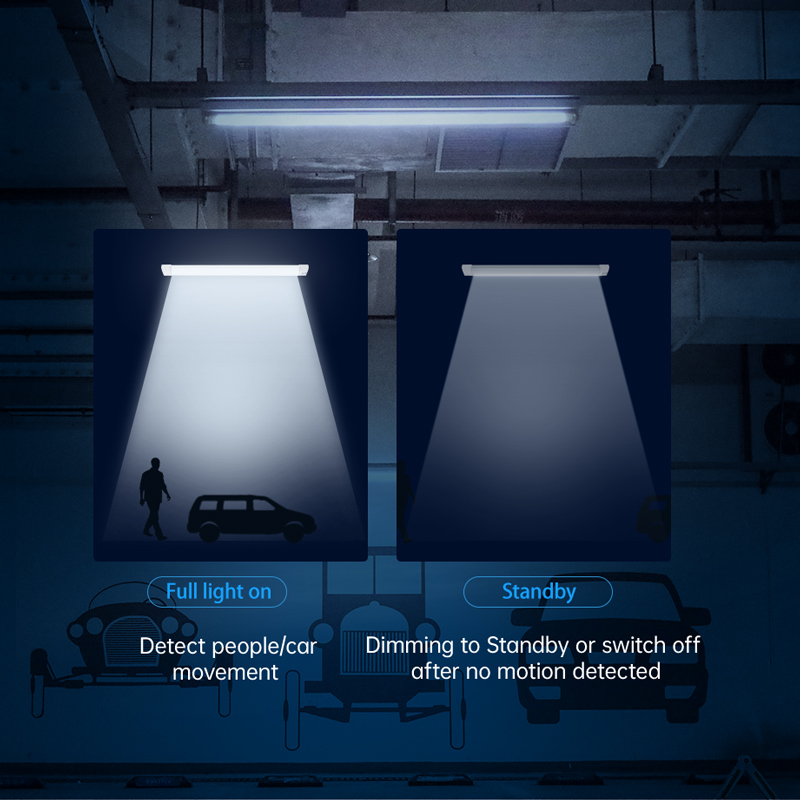
By detecting foot traffic or vehicle movement, motion sensor linear lights automatically control on/off cycles, eliminating prolonged idle consumption. Their “lights on when people arrive, lights off when people leave” mode means lighting is truly on demand.
User experience and property management standards improved
Beyond energy saving, led sensor linear lights provide users a safer and more comfortable experience. Property managers avoid frequent manual intervention, reducing operational burden.
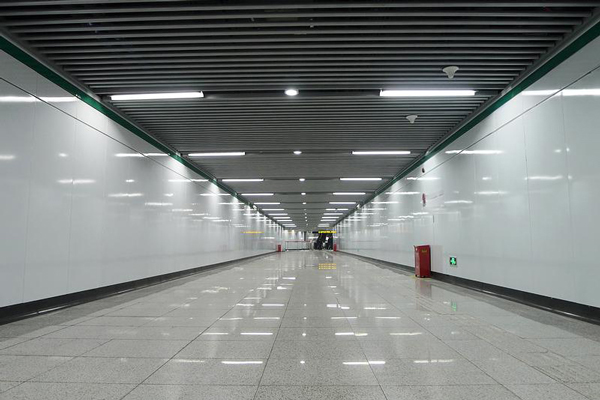
2. How Sensor Linear Lights Work?
Microwave and Infrared Sensing Enable Automatic Detection
The core of LED linear sensor lights is “perception”. They have microwave or infrared sensors that actively detect environmental changes. Microwave sensors can even penetrate thin barriers to track movement, perfect for complex spaces like parking garage and underground passages. Infrared sensors respond fast by detecting human body heat to turn on lighting. In other words, whether someone walks by or a vehicle enters, the lights will detect the signal and turn on.
Light Sensing and Delay Features Make Lighting Smarter
If you are concerned about discomfort from frequent flickering, sensor linear lights have already thought of that. The light sensor will determine if ambient light is sufficient. When natural light is enough, it will turn off to avoid redundant lighting. The delay control ensures a smoother transition—lights won’t turn off immediately after someone leaves but will maintain brightness for several seconds to allow the space to transition naturally without users being plunged into darkness.
Plug and play simplicity
Many think smart lighting requires complex installation, but that’s not the case. The sensor linear light looks like standard LED linear light in appearance and structure, supports ceiling mounting, suspended installation and daisy-chain connection. Most importantly, it requires no additional control system—it’s plug and play with minimal setup. For property managers or contractors, this means upgrading public spaces to smart lighting environment while keeping construction cost low.
3. How Do Light Sensing Adjustment and Delayed Control Make Lighting Smarter?
Light Sensing Adjustment: Lighting Only When Needed, No Waste
Light sensing adjustment allows sensor based linear lights to intelligently decide whether to turn on based on ambient light intensity. For example during the day or in well lit outdoor corridors the lights will stay off, only turning on in dim conditions or at night. This means lighting only turns on when really needed, energy efficiency and no light pollution. For the user this means no manual switching – the lights adapt to the surroundings and the space remains comfortable and safe.
Delay Control: Smooth Transitions, No Sudden Shutdowns
Many have experienced this in hallways or parking garages: sensor lights turn off instantly when you leave, plunging the space into darkness. Sensor linear lights solve this problem with delayed shutdown. Lighting typically stays on for 30-60 seconds after detection has ceased, giving time to complete exit actions like opening doors or pulling out of parking spaces. This gradual transition means comfort, reduces psychological stress, extends fixture life and lowers maintenance frequency.
Smart Experience: Safety and Energy Efficiency Combined
The combination of light sensing and delay control makes linear sensor lights smart and efficient. During peak usage the fixtures will respond instantly for safety lighting; during low usage they will turn off or fade out gradually, saving energy. For property managers or administrators this means reduced energy consumption and improved user experience in public areas, making spaces more considerate and reliable.
- For example installing 20-30W LED linear sensor lights in a 50 meter hallway reduces unnecessary daily lighting by approximately 4 hours. This saves about 240 kWh monthly, $29 in electricity costs and extends fixture life by 20% and reduces maintenance costs.
4. How do sensor linear lights save energy in public areas?
Eliminating standby power consumption
In public spaces, lighting is often left on for extended periods, consuming power even when unoccupied. This waste is most evident in garages, hallways or storage areas. Motion sensor linear lights use intelligent sensing control to only turn on when people or vehicles are present, and turn off when idle. This reduces unnecessary energy use while still having light when needed.
- For example, a 50x30W garage with lights on idle for 6 hours a day consumes around 270 kWh a month. Installing sensor-activated linear lights reduces illumination time by about 50%, to around 135 kWh a month and saves around $16 in electricity costs.
Sensor-Activated Linear Lights Save Energy and Maintenance
Energy savings directly reduces electricity bills while extending fixture life and maintenance costs. Sensor-controlled linear lights controls on/off timing, prevents constant high-energy operation and makes lighting systems in properties, malls or factories more cost-effective. Reduced usage frequency also slows down LED light source and power supply degradation, extending maintenance intervals and further reduces overall operational costs.
- Using the same 50x30W garage sensor linear lights example, annual energy savings is around $200, and maintenance cost is around $100.
Smart Lighting Extends Overall System Life
Frequent and prolonged operation accelerates light decay and equipment aging. Sensor-controlled linear lights optimizes start/stop cycles and runtime, extends LED chips and drivers life. For example, corridor fixtures used 24/7 can reduce annual operating time per fixture by around 50% when only turned on during occupancy, significantly reduces light decay rates and failure probabilities.
- For a 200-light corridor system, extending each light’s life by 2-3 years saves around $1,500 in total maintenance and replacement cost.
Large areas save more energy
While individual light savings may seem small, it multiplies in large spaces. Reducing unnecessary operation by 4 hours a day across hundreds of lights yields significant overall energy savings. Integrated with building automation systems, lighting can enable zone dimming and time-based control, further optimizes energy usage while meeting green building and low-carbon policy requirements.
- A 500-light underground garage reducing illumination by around 4 hours a day saves around 1,200 kWh a month, that’s around $145 a month and around $1,740 a year.
5. Why do sensor-activated linear lights improve safety and comfort?
Automatic lighting reduces risk in the dark
In public spaces, darkness means danger. Whether in underground garages, stairwells or corridors, entering a dark area can be unsettling and may lead to slips, trips or accidents. Sensor-activated linear lights turn on when they detect people or vehicles and you don’t have to fumble for switches or fear the lights going out. This lighting that follows you not only improves safety but also gives you peace of mind.
Natural light transitions for a better experience
Many traditional motion-sensor lights turn off as soon as people leave, leaving you in the dark – an unpleasant experience. Sensor linear lights use delayed control to keep the light on for tens of seconds after detecting departure, creating a smoother transition. Imagine getting out of an elevator or driving away from a parking spot and the light stays on until you’ve safely exited the area and then fades only after you’ve left. These thoughtful details improve user experience and reduce stress.
Bright But Not Glare
Sense of security comes not only from whether the lights are on but also from the comfort of the light. Sensor-activated linear lights usually have anti-glare diffusers or soft optical design that distributes the light evenly without discomfort. For nighttime drivers, glare is especially important to avoid as harsh light can impair vision. In hallways or corridors, soft light makes walking more comfortable and prevents eye strain from prolonged exposure. It balances safety lighting with comfort, making public spaces more pleasant.
6. What environmental conditions can sensor linear lights detect?
Human movement and thermal changes
Sensor linear lights use infrared technology to capture human body heat and movement trajectories for precise sensing. Typically detecting within 6–8 meters with a response time under 0.5 seconds, they turn on lights when you enter hallways, corridors or garages so you don’t fumble in the dark. Whether you’re coming home at night or working night shifts, you get instant light while lights only turn on when needed, not wasting energy.
Vehicle entry or passage
In parking lots, underground garages or tunnels, vehicle movement also triggers lighting. Microwave sensors can penetrate thin obstacles with a detection range of 8–12 meters, detecting vehicle speed and direction to keep paths lit. This reduces collision risks for drivers entering parking spaces or crossing lanes and gives a smarter, safer lighting experience for night time driving.
Automatically adjusts to ambient light intensity
Linear lights with light-sensing modules monitor ambient light intensity and automatically turn on/off within a range of 20–200 lux. When natural light is sufficient, lights stay off; they turn on automatically when light levels drop or at night. This not only adapts to environmental changes but also saves more energy. For you, corridor or garage lighting is always at a comfortable brightness without manual operation and intelligent energy management.
Multi-condition Joint Control for Precise Lighting
Advanced sensor linear lights often combine human presence detection, vehicle detection and light-sensing adjustment to achieve multi-condition joint control. Lights only turn on when needed and can fade out gradually based on a delay setting (30–60 seconds) for a softer, more natural light. This comprehensive sensing approach not only ensures safety but also optimizes energy efficiency, gives a smarter, more efficient lighting experience for property management and users.
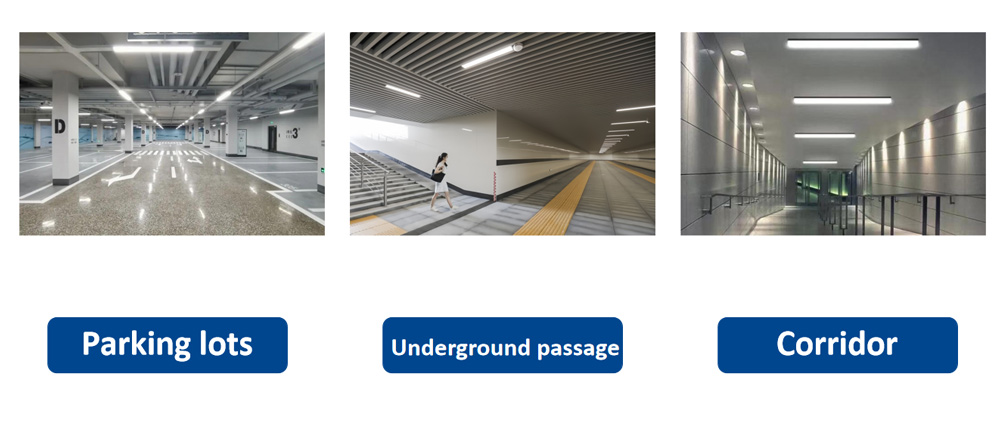
7. Where are sensor linear lights used in public areas?
Underground Garages and Parking Lots
Underground garages and large parking lots are the most common application scenarios for linear sensor lights. These areas are big and have high traffic from people or vehicles. Traditional lighting would result to energy wastage from idle fixtures, wasting resources and increasing management costs. Sensor LED linear lights turn on and off based on vehicle and pedestrian traffic, ensuring safety for drivers and pedestrians. They provide uniform, soft lighting so drivers can easily find parking spaces and navigate at night or low light conditions.
Stairwells and Public Corridors
Stairwells and corridors are high traffic areas with short dwell times. Sensor-activated linear lights enable demand-based lighting, eliminating prolonged idle energy consumption. Lighting turns on when people pass through and fades smoothly under delayed control, ensuring seamless transitions. For residential buildings, offices or hotels, this not only ensures safety but also provides a more convenient and comfortable lighting experience for residents and visitors.
Warehouses and Industrial Sites
LED linear sensor lights are also effective in warehouses, logistics centers and light industrial workshops. Areas like warehouse aisles, between shelves or alongside production lines often have intermittent foot traffic, making precise control difficult with traditional lighting. Sensor linear lights enable demand-based lighting, providing enough brightness while reducing energy consumption. For managers, this means lower operational costs and less maintenance, while workers can work safer and more efficiently in well-lit areas.
Public Facilities and Other Spaces
Beyond common areas, sensor linear lights are used in public spaces like libraries, hospital corridors, school hallways and subway platforms. These areas require high standards for safety, comfort and energy efficiency. Lighting adjusts with foot traffic, ensuring users feel safe while moving through spaces and minimizing energy waste. Through intelligent lighting management, public spaces not only enhance the user experience but also embodies modern and environmentally conscious management.
8. Things to Consider When Choosing Sensor Linear Lights
Detection Range and Sensitivity
When choosing sensor linear lights, the top two things to consider are detection range and sensitivity. Different areas require different detection distances: corridors or stairwells need 6–8 meters, garages or parking lots need 8–12 meters. Too much or too little sensitivity is a problem: high sensitivity will trigger too often, low sensitivity won’t trigger fast enough. Knowing the area and choosing the right detection range and sensitivity will give you precise lighting response, balance of safety and energy efficiency.
Light Sensitivity Adjustment and Delay Control
Light sensitivity adjustment and delay control is key to the smart experience. Light sensitivity decides if the fixture turns on based on ambient light intensity, so it won’t turn on during the day or when natural light is enough. Delay control makes the light stay on for 30–60 seconds after a person or vehicle leaves, so there’s a natural transition in the space. These features not only make the user more comfortable but also reduce energy waste, so you can manage public areas more efficiently.
Installation Methods and Suitable Scenarios
Installation methods are also important considerations. Sensor linear lights usually support ceiling-mounted, suspended or daisy-chain installation, so it can fit different heights and spatial structures. Choose the right installation method based on the area layout so you have uniform light coverage and easy maintenance. For example in stairwells, garages and warehouse aisles, proper installation will avoid blind spots and maximize the fixture’s energy saving potential.
Brand and Certification
Last but not least, the brand and certification of the luminaire should not be overlooked. Premium brands usually have more stable performance and longer lifespan, products certified by FCC, ETL, CE, SAA and other standards ensure safety and compliance. Choose certified sensor linear lights will give you more peace of mind for the manager and secure experience for the user in public areas.

Linear sensor lights are more than just lighting tools, they are the new trend in smart lighting for public spaces. The core functional benefits of sensor lighting “smart sensing, energy saving control and comfortable lighting effect” will enhance safety, energy efficiency and user experience in public areas. Whether in parking garages, corridors, warehouses or subway entrances, sensor LED linear lights will give you reliable solutions. For property managers and operators, choosing sensor linear lights means lower energy consumption, higher safety and long term value.
Get in Touch
Looking for an energy efficient and secure lighting solution? Contact us to learn more about COMELD sensor lighting products and custom solutions for your needs.
- ✅ Factory direct sales and wholesale discounts
- ✅ Customized solutions for sensor lighting
- ✅ Backed by over a decade of professional lighting experience
- ✅ Internationally certified and quality guaranteed
FAQs
1.How much energy do sensor linear lights save compared to standard fixtures?
30-70% energy savings across different scenarios, with most noticeable in parking garages and corridors.
2.Do sensors trigger false alarms in parking garages?
High quality microwave or infrared sensors have advanced sensitivity to prevent false triggers and adjustable sensitivity settings.
3.Can the lights still work if the sensor fails?
Most sensor linear lights have manual mode. Even if the sensor fails, they can work as standard linear lights.
4.Do large public area installations require additional systems?
No extra systems are needed. For centralised management they can integrate with smart control platforms for unified control.


